

Postdoctoral Residency – Redwood City
West Bay Consortium (San Francisco, South San Francisco and Redwood City)
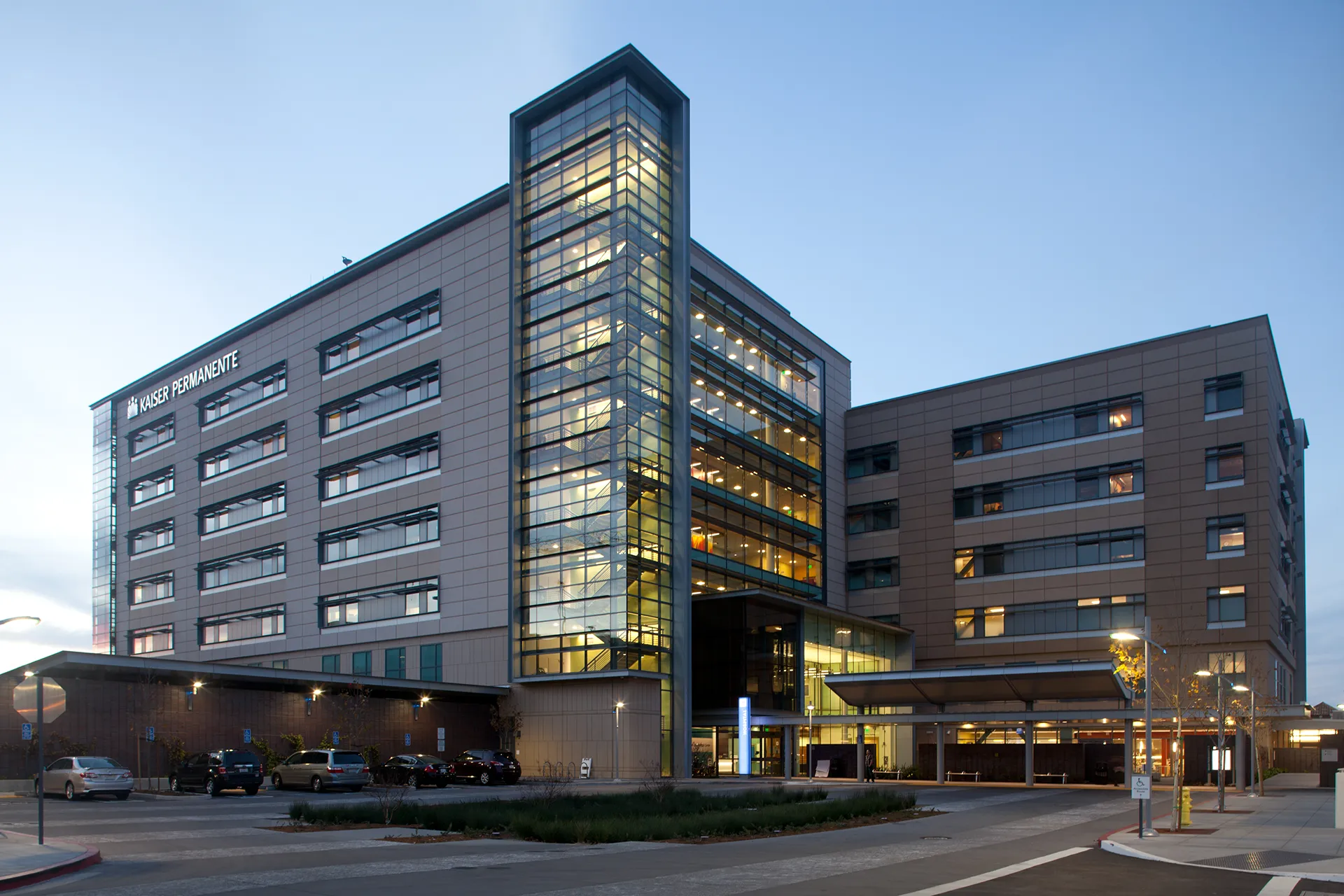
Redwood City lies on a peninsula on the northern edge of Silicon Valley, approximately 25 miles south of San Francisco and 6 miles north of Stanford University. A center of high-tech industry, Redwood City is home to several global technology companies including Oracle, Electronic Arts (EA), and Evernote. Redwood City enjoys a mild Mediterranean climate, moderated by the effects of the San Francisco Bay to the east and the Pacific Ocean over the coastal range to the west. It is the third largest city in the County of San Mateo, with 86,000 residents. Incorporated in 1867, Redwood City is home to the San Mateo County History Museum, and the only active deep-water port within the south bay of San Francisco. For outdoor enthusiasts, the nearby Edgewood Park and Natural Preserve provides miles of hiking trails and site seeing opportunities.
The new Kaiser Permanente Redwood City Medical Center opened in 2014. It a regional center for neurological care and surgery. The patient population falls along a broad ethnic, cultural, and socioeconomic spectrum and includes Medi-Cal enrollees who are part of the San Mateo County Partnership. All age groups and mental health conditions are represented in our Psychiatry Department.
Program Curriculum
Equity, Inclusion & Diversity
We are committed to nurturing and integrating diversity training into all aspects of our postdoctoral residency program by:
Clinic services demonstrating our EID commitment:
|
Didactic Training
| Regularly scheduled weekly didactic seminars are organized and administered regionally for all KP NorCal postdoctoral residents. Residents are required to attend a two-hour weekly virtual seminar, which focuses on developing competencies and expertise in clinical areas most relevant to their day-to-day work.
Our Regional Mental Health Training Program (MHTP) also sponsors seminars for continuing professional development. The seminars are offered at select times during the year for all KP mental health trainees and staff at Kaiser Northern California Medical Centers. We bring in local and national experts on a variety of cutting-edge topics in mental health treatment and research. Regional seminar dates and a list of speakers and topics can be found on the Regional MHTP website. In addition, many of the presentations are recorded and available under the continuing education lecture library webpage. |
Seminars and Meetings (Including professional development seminar, department team meetings, FIC Case Consultation, etc)
Residents attend several weekly team and departmental meetings, in addition to:
Telehealth Training: Kaiser Permanente has greatly expanded its virtual presence, which will allow residents to fully train and practice in a variety of trailblazing platforms in telemedicine to provide accessible mental health care. |
Supervision
| All postdoctoral residents are supervised by licensed psychologists and are assigned to a primary supervisor and a secondary supervisor. The clinical supervisors meet with their assigned resident one hour per week for individual face-to-face and/or virtual supervision. Thus, each resident has two hours of individual supervision per week.
The primary and secondary supervisors are responsible for overseeing the direct delivery of clinical services. The primary supervisor takes a lead role in developing the resident’s learning plan, monitoring their progress, and evaluating their training schedule. The primary supervisor is also responsible for completing the resident’s evaluation after gathering input from other supervisors and staff who may have provided supplementary supervision during rotations or while co-facilitating groups with the resident. |
Community Partnership Program
| Reflecting Kaiser Permanente’s core commitment to mental health and wellness in our communities, each trainee will spend at least 32 hours during their training year on a Community Partnership Project that focuses on improving mental health in the San Mateo County community beyond our Kaiser Permanente patient members. Projects may include presentations on mental health topics or career mentoring in such settings as colleges/schools, faith-based organizations, and other local organizations dedicated to assisting those in need.
The goal of this project is to provide outreach to underserved populations to promote health and advancement. Anchors for the project include developing alliances with individuals and/or systems to improve the lives of those served; providing education and training based on relevant empirical literature; and presenting relevant outcomes data to partnership stakeholders. Residents will meet with the Community Partnership supervisor to assist with placement and the development of a project. |
Psychological Assessment
Psychological assessment is a requirement of this residency to ensure a well-rounded training experience. All residents in our program will conduct at least two ADHD evaluations. The evaluation consists of administering a battery of measures and performance tests, interpreting the results, composing a formal report, and providing feedback to the patient. Residents receive weekly supervision for support, consultation, and training related to assessment.
Research Training
At the beginning of the training year, the site training director works with each doctoral intern to determine which research-based training activity they will engage in over the course of the training year. Interns may choose to collaborate with local department staff to develop a site-specific program evaluation project, collaborate on a program evaluation project with the MHTP Evaluation and Quality Improvement Lab (EQI Lab), or join the MHTP Journal Club.
|
Tracks and Rotations
Adult Psychiatry / Intensive Outpatient Program
| The resident in this track provides concurrent, year-long services in our Adult Psychiatry outpatient program and Intensive Outpatient Program (IOP).
Our Adult Psychiatry team, which consists of psychologists, LMFTs, and LCSWs, provides outpatient services to residents of Palo Alto, San Mateo, and neighboring cities. The population served is diverse in terms of ethnicity, socio-economic status, educational attainment, and presenting problems / symptomatology. Common diagnoses include major depression, peri- and postpartum depression, anxiety disorders, PTSD and trauma-related disorders, bipolar disorder, and OCD. Our clinic offers specialized therapy groups and services to address these disorders. Our clinic offers a gender support group for individuals experiencing gender dysphoria. Training via co-facilitation of therapy groups is designed to enhance and expand a resident’s knowledge and proficiency in the use of evidence-based interventions such as Cognitive Behavioral Therapy (CBT), Dialectical Behavioral Therapy, (DBT), Acceptance and Commitment Therapy (ACT), Exposure and Response Prevention (ERP), and Cognitive Processing Therapy (CPT). Our Adult Intensive Outpatient Program (IOP) provides crisis stabilization for patients who are either (1) highly likely of becoming hospitalized due to severe SI, HI, and/or grave or (2) being discharged from a 5150/5250 and in need to a transition into normative functioning. Our IOP team is comprised of psychologists, therapists, nurse practitioners, and case/social workers. Residents attend frequent meetings with the team, evaluate new patients for risk, co-facilitate therapy groups, lead a psychoeducation group, assist with documenting involuntary hospitalizations when needed and as appropriate to their level of training, and discharge patients whose symptoms are in sufficient remission.
|
Adult Psychiatry
| Our Adult Psychiatry team, which consists of psychologists, LMFTs, and LCSWs, provides outpatient services to residents of Palo Alto, San Mateo, and neighboring cities. The population served is diverse in terms of ethnicity, socio-economic status, educational attainment, and presenting problems / symptomatology.
Common diagnoses include major depression, peri- and postpartum depression, anxiety disorders, PTSD and trauma-related disorders, bipolar disorder, and OCD. Our clinic offers specialized therapy groups and services to address these disorders. Our clinic offers a gender support group for individuals experiencing gender dysphoria. Training via co-facilitation of therapy groups is designed to enhance and expand a resident’s knowledge and proficiency in the use of evidence-based interventions such as Cognitive Behavioral Therapy (CBT), Dialectical Behavioral Therapy, (DBT), Acceptance and Commitment Therapy (ACT), Exposure and Response Prevention (ERP), and Cognitive Processing Therapy (CPT). Residents will be given flexibility in tailoring a training plan with the ability to focus training on specific treatments (e.g., trauma, DBT, etc) or generalize their skills across a large base of modalities. |
Child and Adolescent Psychiatry
| The resident in the Child and Adolescent track will work with children, teens, and families in individual, dyadic, family, group, and consultation-liaison treatment modalities. Depending on the rotations selected, residents can expect to be trained in CBT, family systems therapy, parent management training, solution-focused therapy, and brief psychodynamic interventions.
Residents also have an array of therapy groups they can co-facilitate such as Teen IOP, CBT and ACT-based skills groups, and parent management training groups. An exceptional opportunity associated with this track is a rotation providing consultation-liaison services in our Pediatrics department. Residents typically complete between 2 to 3 mental health assessments per week. Child and Adolescent Psychiatry providers operate within the context of a multidisciplinary team consisting of psychiatrists, psychologists, LCSWs, LMFTs, and case managers.
|
Schedule
| All clinical tracks offer a hybrid of onsite and remote work schedules along with either a 5-day or 4-day (no more than 10 hours per day) 40-hour workweek.
Typically, residents work 1-2 days onsite and 2-3 days remotely after several weeks of onboarding has been completed. Composite Hours:
|
Program Graduates
2024-2025 Cohort
| Graduate | University/Institute | Track/Specialty Rotation | Current Position, Specialty & Location |
|---|---|---|---|
| Samantha O’Neill, PhD | Palo Alto University | Adult Psychiatry, IOP | Psychological Assistant; Adult Psychiatry; Psychiatry, Kaiser Permanente, Redwood City |
| Lauren Romero, PsyD | University of San Francisco | Addiction Medicine Recovery Services | Psychological Assistant; Adult Psychiatry; Psychiatry, Kaiser Permanente, Redwood City |
2023-2024 Cohort
| Graduate | University/Institute | Track/Specialty Rotation | Current Position, Specialty & Location |
|---|---|---|---|
| Gilly Dosovistky, PhD | Palo Alto University | Child and Adolescent Psychiatry, Teen IOP | Staff Psychologist; Child and Adolescent Psychiatry; Psychiatry, Kaiser Permanente, Redwood City |
| Jennifer Miller, PhD | Palo Alto University | Adult Psychiatry, IOP | Military Psychologist; Psychiatry; US Army |
| Isabella Romero, PhD | Palo Alto University | Addiction Medicine Recovery Services | Staff Psychologist; Addiction Medicine Recovery Services; Kaiser Permanente, San Jose |
2022-2023 Cohort
| Graduate | University/Institute | Track/Specialty Rotation | Current Position, Specialty & Location |
|---|---|---|---|
| Lauren Yang, PsyD | Yeshiva University | Adult Outpatient Psychiatry, IOP | Staff Psychologist, Adult Outpatient, Psychiatry Dept., Kaiser Permanente, Redwood City |
| Janine Carpenter, PsyD | The Wright Institute | Adult Outpatient Psychiatry, Eating Disorders | Psychological Assistant, Outpatient Eating Disorders, Psychiatry Dept., Kaiser Permanente, Redwood City |
2021-2022 Cohort
| Graduate | University/Institute | Track/Specialty Rotation | Current Position, Specialty & Location |
|---|---|---|---|
| Christina Lam, PhD | Arizona State University | Adult Outpatient Psychiatry, IOP | Staff Psychologist, KP Accelerate (Depression) track, Psychiatry Dept., Kaiser Permanente, Redwood City |
| Alexandria Senkarik, PsyD | Azusa Pacific University | Addiction Medicine Recovery Services | Staff Psychologist, Addiction Medicine Recovery Services, Kaiser Permanente, Redwood City |
| Emily Palmer-Rice, PsyD | Carlow University | dult Outpatient Psychiatry, Eating Disorders – outpatient program (teen and adult) | Psychological Assistant, Eating Disorder Outpatient Program, Department of Psychiatry, Kaiser Permanente, Redwood City |
2020-2021 Cohort
| Graduate | University/Institute | Track/Specialty Rotation | Current Position, Specialty & Location |
|---|---|---|---|
| Kimya Behrouzian, PsyD | John F. Kennedy University | Addiction Medicine Recovery Services, Teen/Adult | Staff Psychologist, Addiction Medicine Recovery Services, Kaiser Permanente, Redwood City |
| Priscilla Wong, PsyD | Wheaton College | Adult Outpatient Psychiatry, Eating Disorders – outpatient program (teen and adult) | Private Practice licensed psychologist, Eating Disorders/General Adult, Bay Area, CA |
| Ronna Milo Haglili, PsyD | California School of Professional Psychology at Alliant International University | Child and Adolescent Psychiatry, Teen IOP | Psychological Assistant , Community Mental Health |
2019-2020 Cohort
| Graduate | University/Institute | Track/Specialty Rotation | Current Position, Specialty & Location |
|---|---|---|---|
| Joanna Maung, PhD | University of Missouri, Kansas City | Adult Outpatient Psychiatry, IOP | Private Practice |
| Alena Gittens, PsyD | Palo Alto University | Addiction Medicine Recovery Services, Teen/Adult | Community |
| Anna Kreiter, PsyD | PGSP-Stanford PsyD Consortium | Adult Outpatient Psychiatry, Eating Disorders – outpatient program and intensive outpatient program (teen and adult) | Private Practice licensed psychologist, Eating Disorders |
| Daniel Friedman, PsyD | PGSP-Stanford PsyD Consortium | Child and Adolescent Psychiatry, Teen IOP | Staff Psychologist, Child/Adolescent Psychiatry Dept., Pediatric Behavioral Medicine Liaison, Primary Supervisor – Child Postdoctoral resident, Kaiser Permanente, Redwood City |
2018-2019 Cohort
| Graduate | University/Institute | Track/Specialty Rotation | Current Position, Specialty & Location |
|---|---|---|---|
| Michael Arevalo, PsyD | Marywood University | Adult Outpatient Psychiatry, IOP | Staff Psychologist, Kaiser Permanente, Southern California |
| Justin Gauthier, PhD | University of California, Santa Barbara | Addiction Medicine Recovery Services, Teen/Adult | Staff Neuropsychologist, Kaiser Permanente, Pleasanton |
| Elisa Miyake, PhD | Arizona State University | Adult Outpatient Psychiatry, Eating Disorders – outpatient program and intensive outpatient program (teen and adult) | Staff Psychologist, Eating Disorder Outpatient program, Kaiser Permanente, South San Francisco |
| Nishita Berla, PsyD | PGSP-Stanford PsyD Consortium | Child and Adolescent Psychiatry, Teen IOP | Staff Psychologist and Manager, Child/Adolescent Psychiatry Dept., Kaiser Permanente, Redwood City |
